The Bone Specialist
The Curse of Knowledge
I remember being in a team meeting some time ago and listening to a colleague hold sway on the intricate problem. It was an extremely technical monologue and I vividly recall only really following very superficially. The rest of the room was leaning in and nodding along.
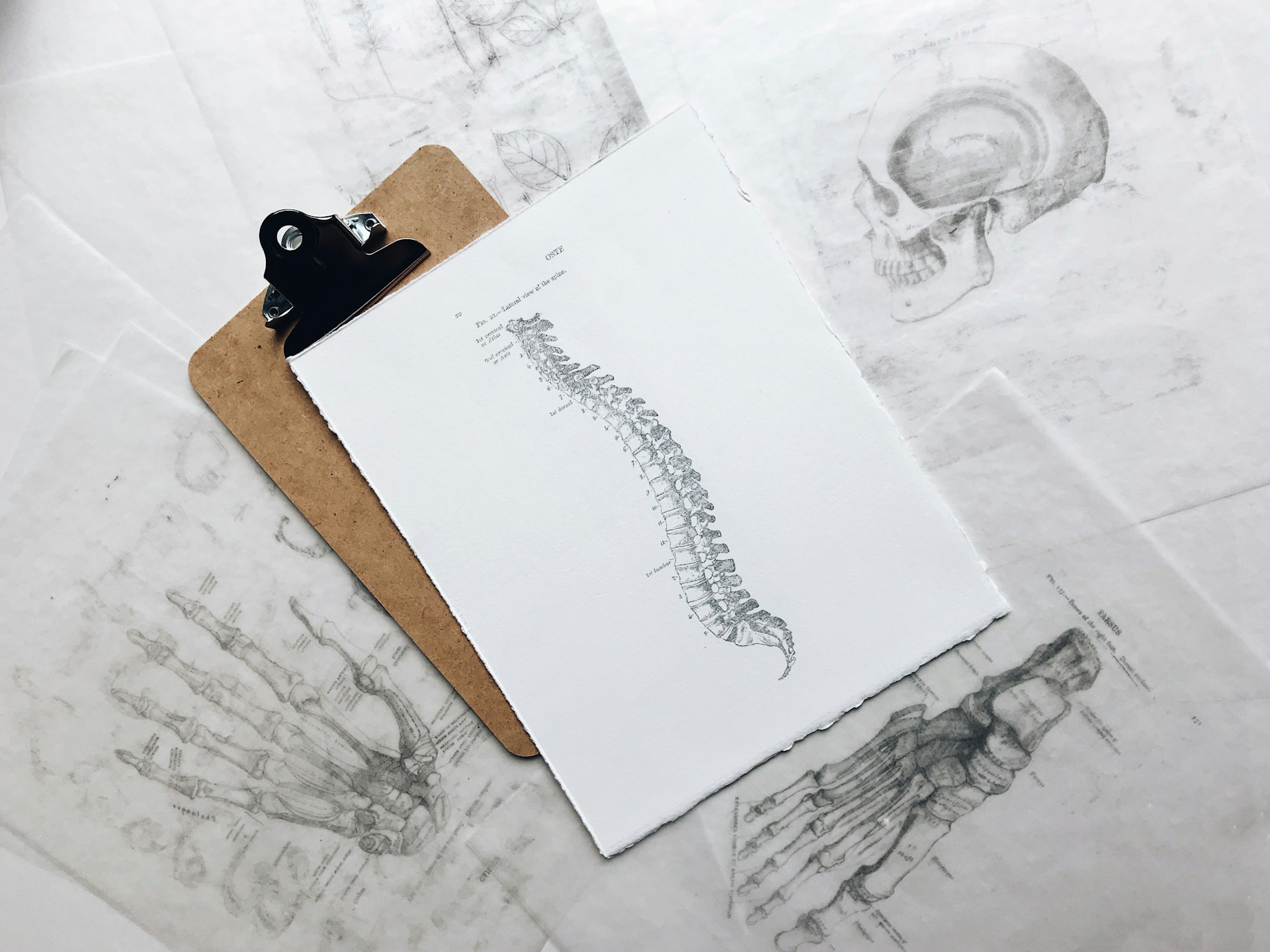
It wasn't that I didn't understand. But rather because my brain was telling me "this is deeply knowledgeable...but it misses the point". I knew then we weren't being led by a chiropractor, we were being led by a bone specialist who had never seen the full skeleton.
The Two Types of Expert
Traits Of A Bone Specialist
The bone specialist is extremely knowledgeable in a narrow field. Their world is an isolated bone on a purple velvet tray. They understand density, permeability, colouring and mineral composition. They can tell you everything you need to know (and more) about the bone on the tray.
The language they use is precise, technical and intimidating. They talk confidently as they believe they are the oracle on the subject.
They have no concept of a world outside this bone. A skeleton is a completely alien concept to them and they've never heard of musculature. The single bone on the tray is their universe.
Traits Of A Chiropractor
Their world is broader than a Bone Specialist's. They understand the entire musculoskeletal system and their expertise is in how the various muscles and bones interconnect.
I have childhood memories of singing a song "the foot bone is connected to the heel bone" etc. (Dem Bones) and this is exactly the chiropractor's world.
They are specialists in understanding how bones relate to each other. They therefore talk about purpose, gait, load, movement and recovery.
In contrast to the Bone Specialist they are more thoughtful when answering as they hold the whole system in their head. So they can be slower to their diagnosis. They know a symptom in one area could be caused by any one of many reasons or factors. A hip problem, for example, could cause a neck ache.
The Data 'Bone Specialist'
Translating these two types of expert into the tech sphere, the Bone Specialist is the engineer who is obsessed with a single tool or component. They know the stored procedure or the config setting in exquisite, theoretical detail.
They immediately get stuck in and because they operate in one plane their "solutions" end up being convoluted masterpieces of local optimisations.
The bigger picture that they miss is the layered and interconnected nature of data analytics. In particular:
- The semantic model (the skeleton)
- The business process involved (the body's purpose)
- The user's pain point (the symptom)
They deliver a perfect but irrelevant component. And the project limps along.
An example of this thinking might be the overlapping slicer problem in Power BI. Many bone specialists try and solve this at the reporting layer by using calculated columns or measures without realising it is a semantic model level problem. See Architecting An Advanced Slicer for more detail.
The Chiropractor Mindset
In contrast the Chiropractor takes a holistic view. Before touching anything they ask:
- What are we trying to achieve here?
- Where is the pain? (friction, inefficiency, complexity)
- What is the current gait (how does the data flow from source)?
- What does a healthy skeleton look like for this purpose? (what defines success?)
Only after assessing all this will the chiropractor roll up their sleeves. This information together with their view of the world will tell them where they need to work (could end up being multiple places) and what they need to do there. Their goal is not a perfect bone, but a pain-free, functioning system.
Promoting The Specialist
In certain workplaces, the Bone Specialist sounds knowledgeable, never flaps and is confident. Their complex brute-force solutions generate a large volume of code and this looks impressive to the layperson. Their bone hyper-focus means they don't see the bigger picture and therefore, politically, are seen as both committed and non-threatening. This combination is intoxicating to the less technical management layer.
In contrast, the Chiropractor doesn't produce big bang results. Instead their solutions tend to be simple and incremental. Or boring to the layperson.
They can be perceived as pedantic or slow because they ask questions about the long-term or about second-order effects. Subjects that can keep for another day in most people's eyes.
They can also burst the Bone Specialist's bubble and reject their complex solution by pointing out complications caused by the interconnectedness of the bones. Or conversely they can offer a simple solution to a problem the Bone Specialist has made complicated.
The Tell-Tale Sign You're Being "Bone-Specialisted"
These are the signs that there is at least one bone specialist in your midst:
1. Conversations are dominated by tool / component deep-dives
The problem is not discussed holistically. Instead the conversation starts with the tooling. And either moves forward from there or becomes a deep-dive into the tool itself. And the problem statement gets lost.
2. "Discovery" happens mid-build
I've seen this play out during a data migration. Part way through the Bone Specialist announced that they had just discovered that currencies were in play and so they needed to think about conversions.
3. Projects have no skeleton
Projects don't have a framework. Instead it's very much about detailed bone work and the "grind" without much of an overarching plan.
4. Challenging the specialist
When challenged, instead of clarifying and making things simpler, the Bone Specialist hides behind deeper technical jargon.
Becoming a Chiropractor
This is a mode of thinking. The key is to always start from the user's point of view. What is their problem? What is their pain?
Sketch. Sketches are invaluable for understanding the helicopter view. I draw crude boxes and flow diagrams using pen and paper. I have also tried Microsoft Whiteboard and Excalidraw for this.
But draw with a purpose. Start with what the end state should look like. What is the best possible outcome for the user? Then move backwards through the layers asking "what has to happen here for that outcome?"
Talk like a human not a computer. For example use "getting answers faster" rather than "optimising the SQL stored procs".
When thinking about ways forward advocate for changes with small blast radii rather than jumping in with both feet. For example prototyping, spiking and phasing delivery. Chiropractors tend to iterate based on a loose framework, they don't rip everything up and start anew each time.
Rather than focussing on the characteristics of a bone, think about how bones fit together, what are the ways that one bone can influence another? It's not about deep domain knowledge about a bone but rather a fluent understanding of how the behaviour of one bone affects another bone in the skeleton.
Once a solution is found, evaluate it. Always be thinking "is there a simpler way?"
The Diagnosis
The industry as a whole has a habit of being impressed by bone specialists and mistaking component-level complexity for sophistication.
We promote and champion brilliant specialists and then wonder why our data products are fragmented, painful and inflexible.
Everything we build at a future date is based on the solution that has gone before. If today's solution is needlessly complex, we're making tomorrow's solution more difficult. It's like building a house on shaky foundations.
Have a healthy dose of scepticism and don't accept solutions at first glance. If it looks and feels complicated, ask "is there a simpler way?". Good data products are simple to build and simple to maintain.
We don't need more bone specialists. We need more chiropractors. These people respect the bones but live for the movement they make possible.